
Please rotate your phone.
This experience is designed for portrait mode.
CASE STUDY · ALBERTSONS COMPANIES, INC.
Design System Documentation Website
Single source of truth for Unified Design System standards, usage guidance, and release updates.
SCROLL
Ownership
Treated the documentation website as a product surface, not a static reference. Owned the experience strategy, information architecture, templates, content standards, and governance model required to scale adoption across teams.
Mandate
Reduce delivery friction in Merchandising by eliminating fragmented documentation and establishing a single source of truth that improves implementation consistency, accelerates onboarding, and reduces dependency on the UDS team.
Key Outcomes
- Established the UDS Documentation Website as the primary destination for standards, usage guidance, and release updates.
- Enabled self-serve adoption at scale and reduced onboarding friction.
- Reduced 'how to use UDS' support tickets by 65%.
- Increased adoption by consolidating guidance into one searchable hub.
- Sustained long-term quality through governance, templates, and repeatable validation workflows.
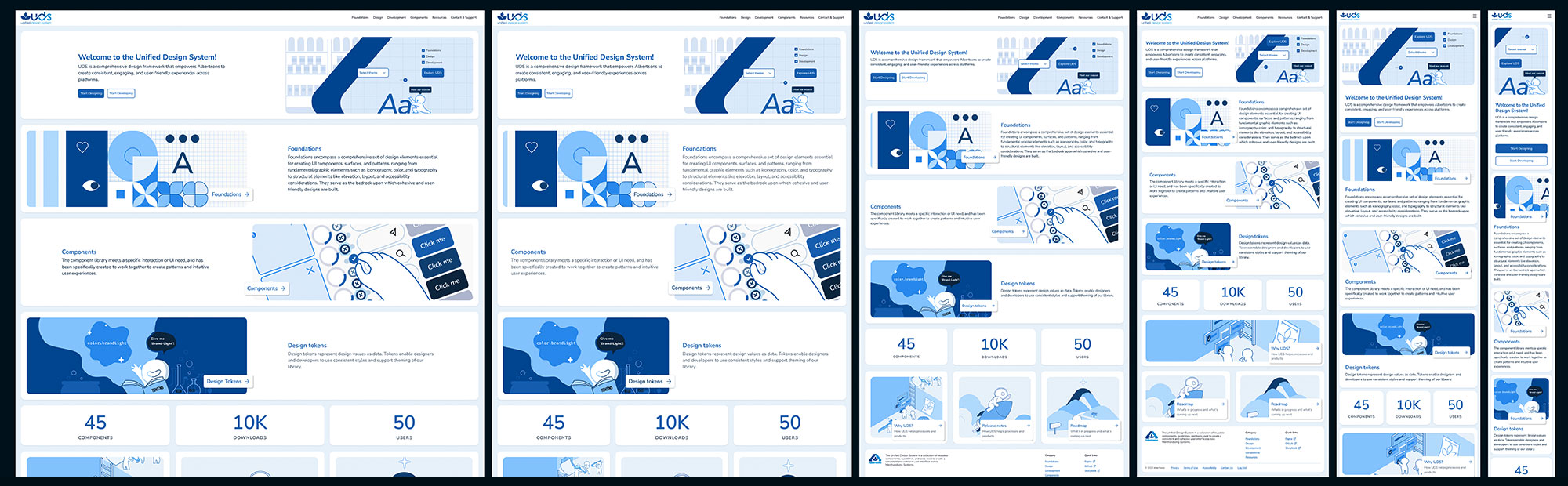
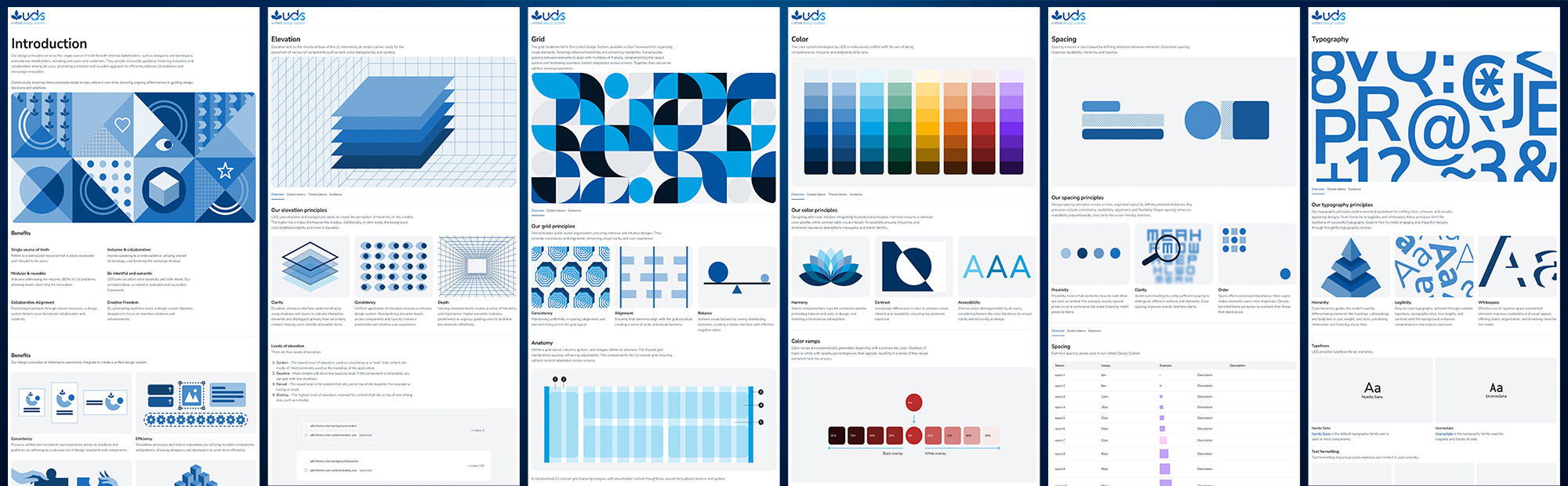
UDS Documentation Website — Platform Views
Problem Statement
"Fragmented documentation and inconsistent guidance increased onboarding friction and slowed delivery."
Before the UDS Documentation Website, teams had to search across disconnected sources for answers. This increased time to implementation, created repetitive support requests, and contributed to inconsistent execution across pods.
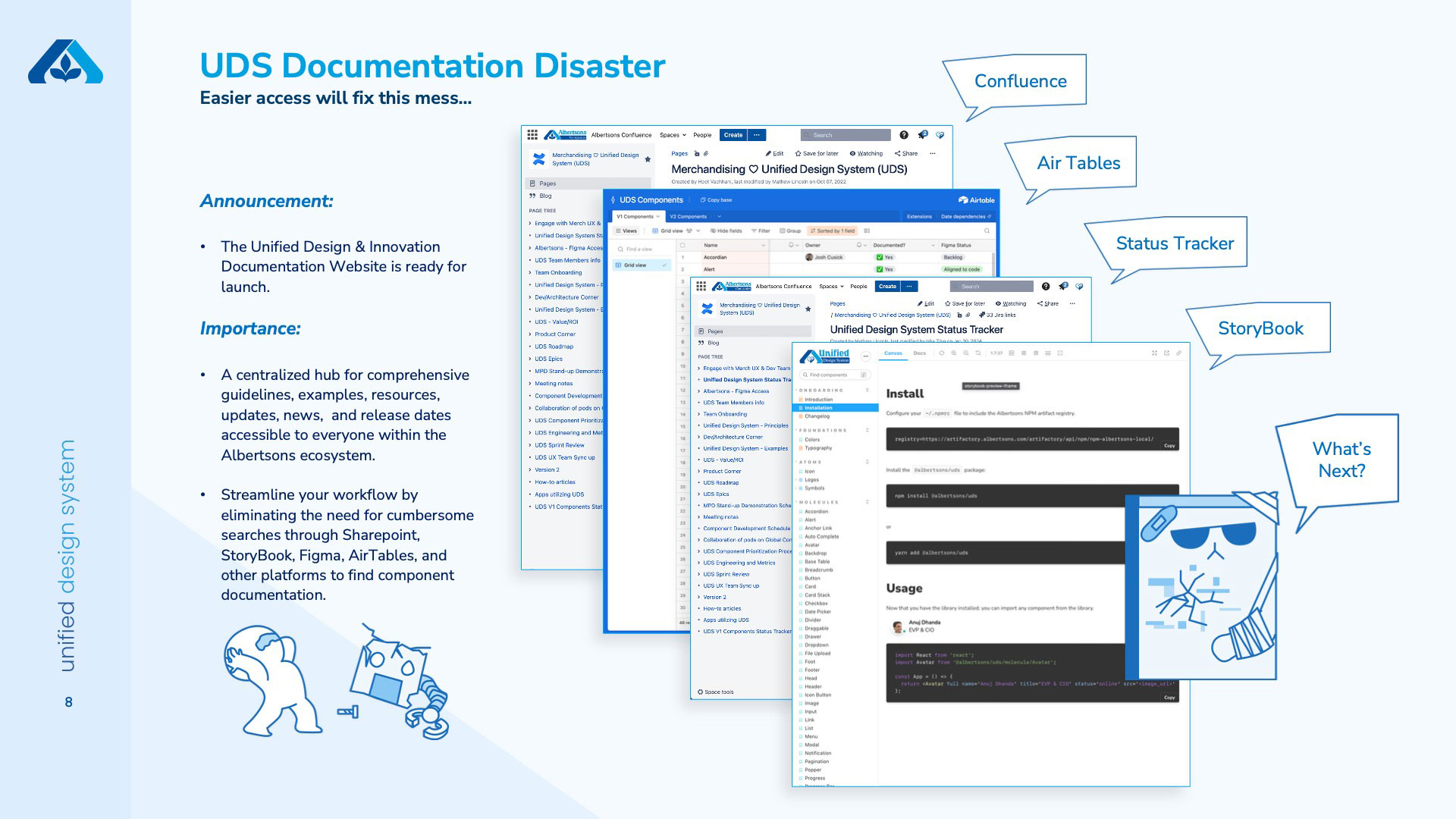
UDS V2 Roadmap Planning — consolidating documentation into a structured platform.
Scope, Delivery & Governance
Operating Model
- Owned the operating model for UDS adoption across pods, including intake, prioritization, stage gates, and outcome reporting.
- Partnered cross-functionally across design, engineering, product, and quality.
- Maintained governance to prevent duplication, protect standards, and keep the system cohesive as contributions scaled.
Documentation Platform Strategy
Centralized Hub
Designed to Centralize & Scale
- Centralize standards, guidelines, examples, resources, updates, and release dates into one searchable hub.
- Make component usage clear and repeatable through consistent documentation templates.
- Reduce back-and-forth support by improving discoverability and self-serve guidance.
- Support real team workflows through responsive layouts and predictable content structure.
Core Decisions
Core Architecture Decisions
- Standardized documentation templates to keep pages consistent, scannable, and maintainable.
- Search-first information architecture based on naming conventions and predictable patterns.
- Integration mindset — aligning documentation to design and engineering workflows so teams stop hunting for answers.
Scope
What the Platform Covered
- Foundations and standards.
- Components, templates, and usage patterns.
- Release updates and change communication.
- Consolidation of documentation sources across design, development, and tracking tools.
- Governance model and contribution workflow.
Governance, QA & Dev Validation
UDS was managed as a living product with repeatable quality practices. The documentation website reflected this rigor — ensuring that what teams found was accurate, scannable, and aligned with actual implementation.
- Defined lifecycle including review, implementation, validation, release, measurement, and deprecation.
- Audit checklists covering typography, layout and spacing, form behaviors, icons and imagery, and interaction details.
- Cross-browser and responsive validation as a baseline expectation.
- Documentation practices designed to keep guidance accurate and easy to find as the system evolved.
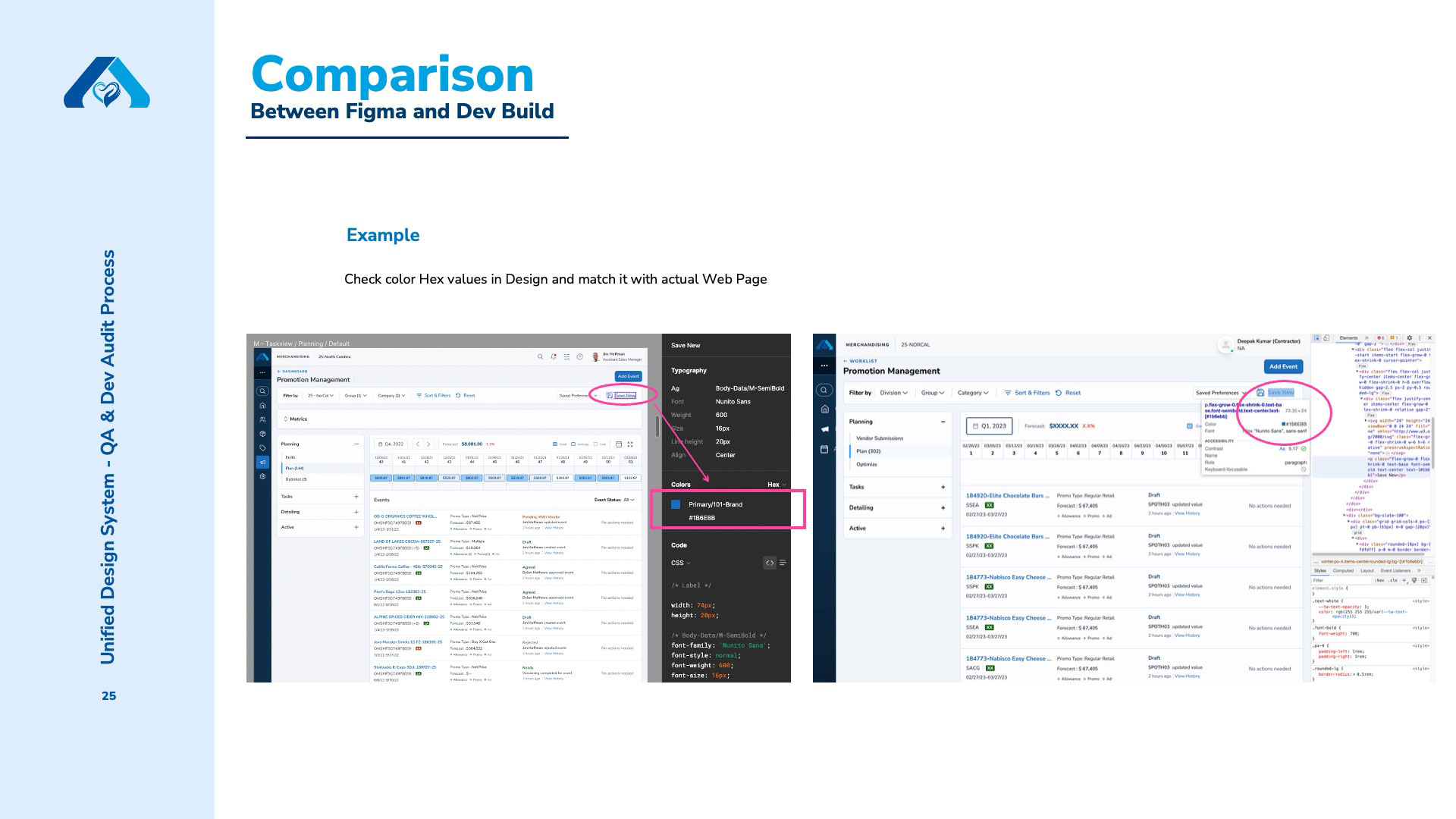
UDS QA & Dev Process — repeatable validation model for documentation and implementation.
Roadmap, Adoption & Scale
The documentation website was treated as a first-class platform epic alongside the core system work — not an afterthought. Comprehensive documentation reduced the need for extensive guidance for pod developers and minimized back-and-forth communication as more teams adopted UDS.
UDS Core Components UDS 2.x Themes Update UDS Website UDS Demo App
Defined a prioritization model across MSP PODs, Collective Hub needs, and the UDS backlog to keep high-impact work ahead of 'nice-to-haves.'
Before & After the Documentation Website
BEFORE
- Documentation scattered across multiple platforms.
- Slow onboarding and frequent hand-holding.
- Repeated questions and high support interruptions.
- Inconsistent implementation and rework.
AFTER
- One centralized hub for standards, examples, resources, updates, and release dates.
- Strong search success for Merchandising developers and UX teams.
- 65% reduction in 'how to use UDS' support tickets.
- Documentation became almost completely self-sufficient for onboarding and ongoing usage.
- Junior developers praised the clarity and ease of use.
76% SLA reduction — supplier onboarding from 21 to 5 days
23% error reduction in Merchant & Supplier Portal
+15 NPS improvement
Metrics reflect downstream impact of UDS adoption, including the documentation platform, applied to the Merchant & Supplier Portal.
“We made UDS feel like a product, not a side project.”
This case study reflects internal platform work. Proprietary implementation details have been generalized while preserving strategy, operating model, and outcomes.