
Independent product · Fiesta! Bingo
Fiesta! Bingo: taking a social game from idea to release.
A consumer product connecting hosting, joining, calling, cards and shared displays across a complete game experience.
- My role
- Founder · Product lead, designer & Flutter engineer
- Period
- Jan 2026 – Present
- Designed for
- Bingo hosts & players
AI leadership noteGenerate test sessions around real game rules
Original approach
Owned product strategy, interface design, Flutter engineering, real-time services, testing, monetization and release operations. The initial iOS release moved from planning through the App Store in under one month.
What could change today
Have an agent propose difficult host and player scenarios: a late join, a reconnect or two claims on the same call. Run those scenarios against a deterministic sequence of balls.
Workflow excerpt. The numbered steps show the same part of the journey in each version. The full project includes work beyond this comparison.
Original workflow
- Set up the game
- Join and get cards
- Call and follow numbers
- Verify the winner
Proposed workflow with AI
- Let an agent draft test sessions around the host’s game rules.
- Have players join and check their assigned cards.
- Replay calls and reconnects against a fixed draw order.
- Compare the winning claim with the official record.
How to test the change
Compare every screen with the recorded call order. Test on a real host device, a player phone and the shared display.
01 / Customer & problem
The need behind the work.
Who needed this.
Hosts and players need a shared game state with clear controls, cards and winning conditions.
The problem to solve.
A bingo night involves more than drawing numbers. Hosts need to configure and run the game while players need cards, clear calls and confidence about the winning pattern.
Connect the host and player tasks in one approachable product, with support for physical cards, mobile play and a shared TV display.
02 / My ownership
Responsibilities.
Owned the product from UX and software implementation through testing, monetization and release, using live-game feedback to refine the experience.
The constraint to work through.
The experience spans different roles, physical and digital cards, mobile devices and shared displays.
- Set up the game
- Join and get cards
- Call and follow numbers
- Verify the winner
03 / Actions & delivery
How the work came together.
Owned product strategy, interface design, Flutter engineering, real-time services, testing, monetization and release operations. The initial iOS release moved from planning through the App Store in under one month.
The experience connects hosting and joining with caller controls, card creation, printable and QR-enabled cards, scanning, on-device OCR and winner verification. TV display support makes the game visible to a group.
Applied shared design and architecture standards to AI-assisted development and validated the experience through live games and product testing. The current product site lists iOS as available, with Google Play coming soon.
04 / Decisions & judgment
What carries through the design.
Design both sides of the game.
The host needs control of pacing and patterns; players need understandable cards and game state. Those tasks have to remain synchronized.
Bridge physical and digital play.
Printing, QR access, scanning and TV output connect familiar bingo-night behavior to mobile participation.
Related interaction states
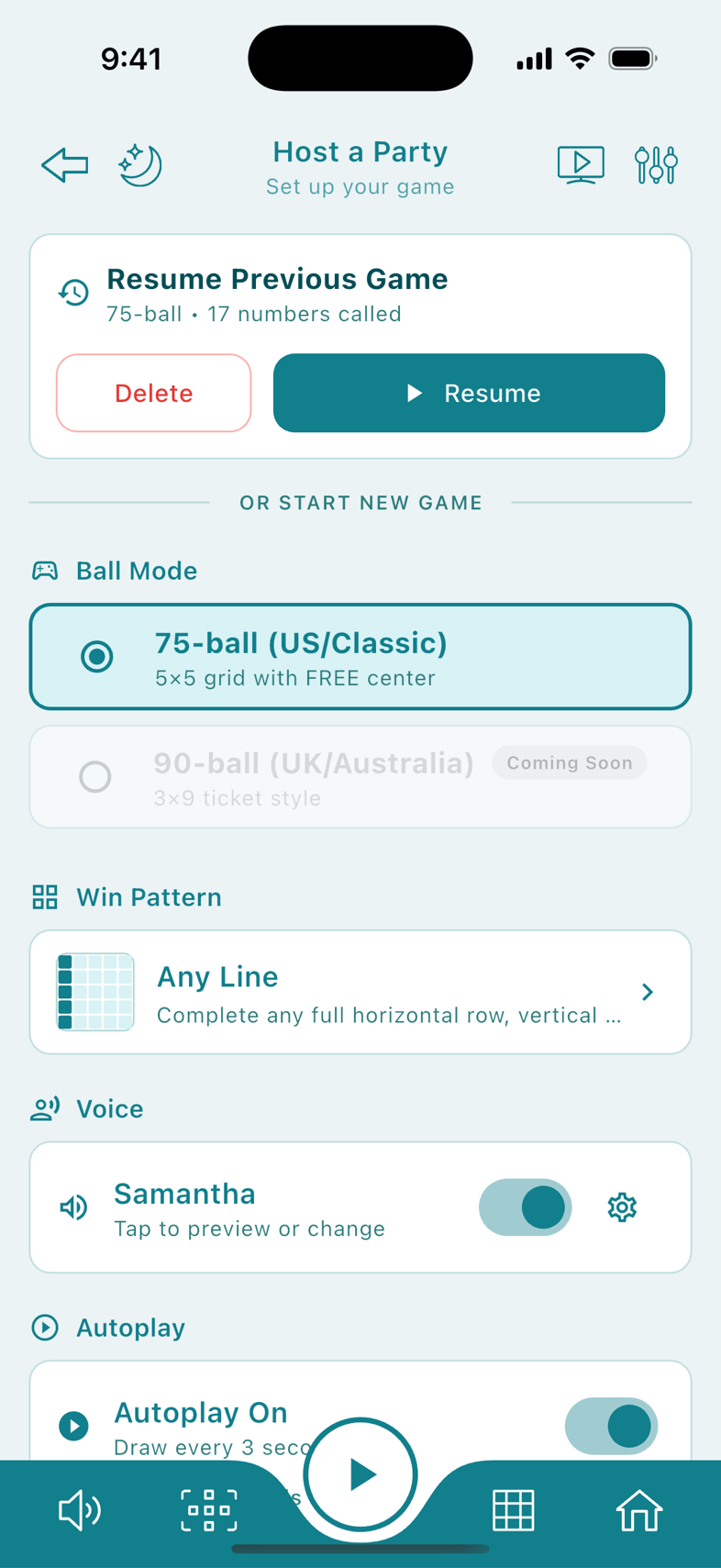
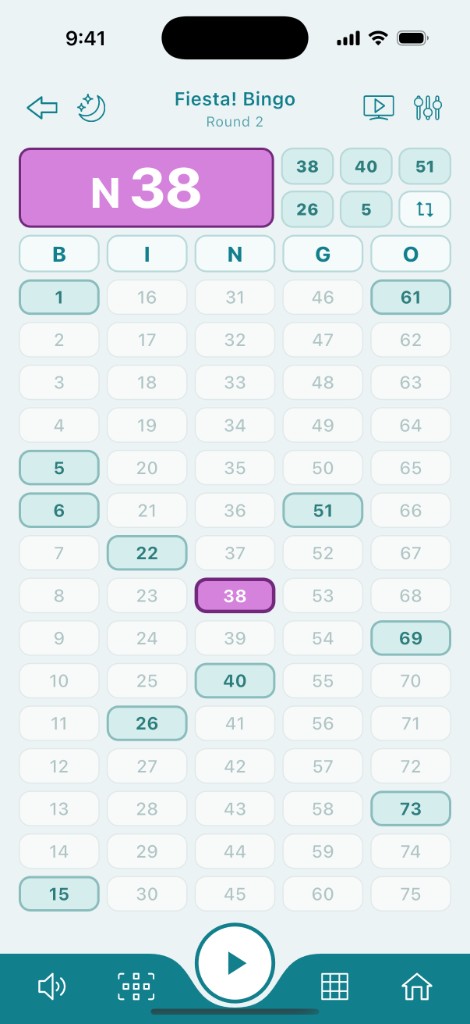
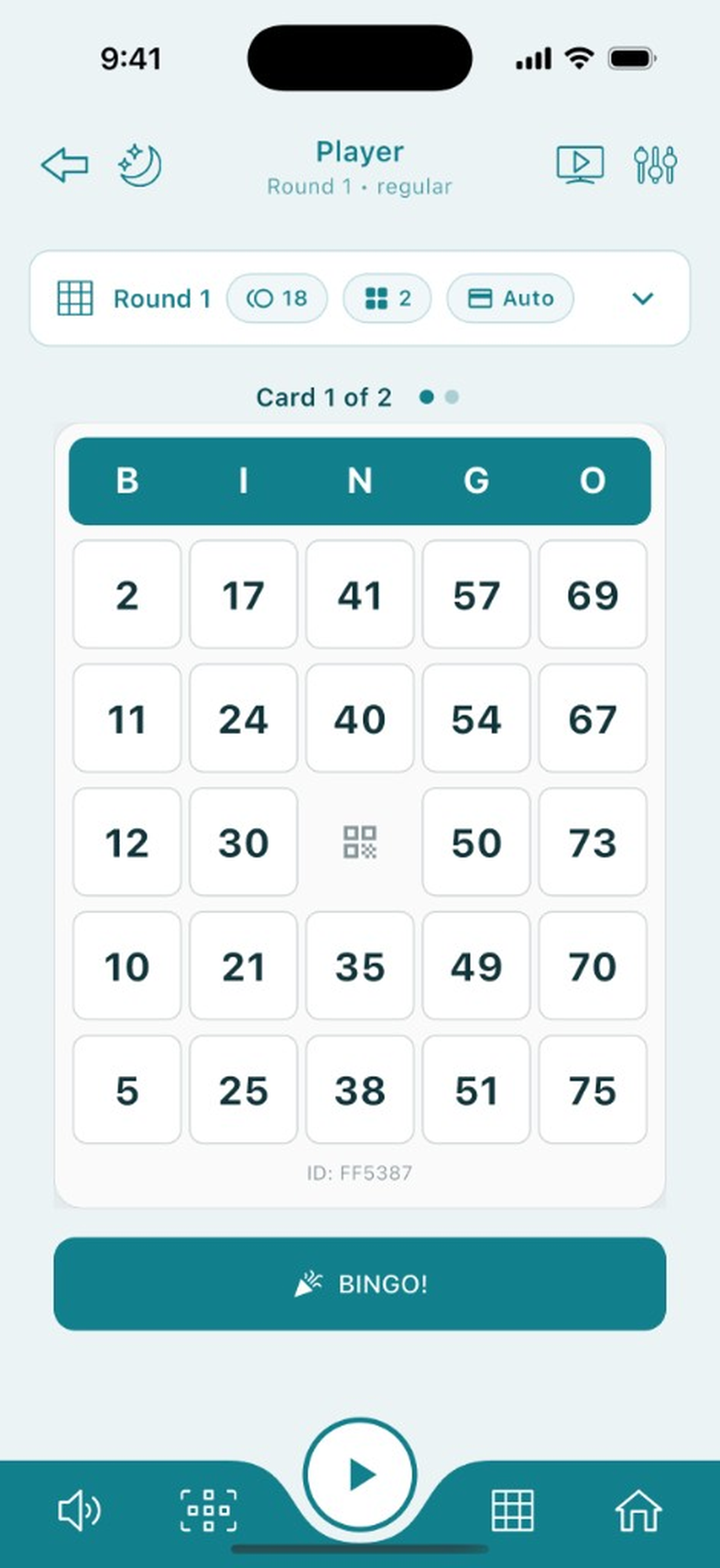
Different roles, one shared game.
The host configures the game, the caller tracks drawn numbers and each player follows their own card. These connected views support the same round.
Set up the party
Configure the host’s game and pattern.
Run the calls
Keep called numbers and progress visible.
Follow a player card
Give each player a focused view of their card.
05 / Results & business value
What changed through the work.
A released iOS application and a cross-platform Flutter product spanning game controls, multiplayer services, cards, scanning and release operations. The initial iOS release reached the App Store in under one month.
Why it matters.
End-to-end ownership connected the customer experience to engineering and release operations, producing an available consumer application rather than an isolated design concept.
06 / Reflection
Lessons for future projects.
Keep validating the complete game with real groups. Hosting, joining and winner verification have to work together under the conditions of play.
Let’s talk about your next chapter.
Exploring Senior Director, Head of Design and VP opportunities.