
Walmart · Data Science
Cassini: making camera media organized and accessible.
A repository for camera video and extracted images, connecting organization, retrieval and authorized investigation support.
- My role
- Lead UX Technologist · Data Science Platforms
- Period
- Oct 2019 – Feb 2022
- Designed for
- Media reviewers & investigation teams
AI leadership noteSearch footage with a reviewable trail
Original approach
Cassini was developed as one component of a larger system, with the intention that the separate applications would eventually come together. Its role was to give camera video and extracted images an organized home for review and later retrieval.
What could change today
Add a natural-language search layer over authorized camera, time and location metadata. Return matching clips with timestamps and preserve the original media for the investigator.
Workflow excerpt. The numbered steps show the same part of the journey in each version. The full project includes work beyond this comparison.
Original workflow
- Identify the needed media
- Define store & time scope
- Organize and retrieve
- Support authorized review
Proposed workflow with AI
- Describe the clip or still needed for a review.
- Limit retrieval to the permitted stores and time range.
- Review candidate timestamps and organize relevant results.
- Inspect the source footage before authorizing a handoff.
How to test the change
Try identical searches under different access roles. Check retrieval accuracy, original-file references and the access log before any export.
01 / Customer & problem
The need behind the work.
Who needed this.
Reviewers need an organized home for camera video and extracted images, with a direct way to find relevant material for internal review and investigation requests.
The problem to solve.
Camera recordings and images extracted from video need a place to live where reviewers can organize them and retrieve the relevant material. Fragmented storage makes it harder to locate the right content for internal review or an investigation request.
Provide a coherent repository and retrieval experience for camera media, supporting internal use and authorized investigation requests.
02 / My ownership
Responsibilities.
My UX work connected Cassini’s repository purpose with its request and retrieval workflows within Walmart’s Data Science Platforms organization. Engineering and data partners contributed to media processing and storage services.
The constraint to work through.
The repository was one part of a larger system being developed as separate components. Media availability, retrieval scope and permission to disclose are distinct concerns.
- Identify the needed media
- Define store & time scope
- Organize and retrieve
- Support authorized review
03 / Actions & delivery
How the work came together.
Cassini was developed as one component of a larger system, with the intention that the separate applications would eventually come together. Its role was to give camera video and extracted images an organized home for review and later retrieval.
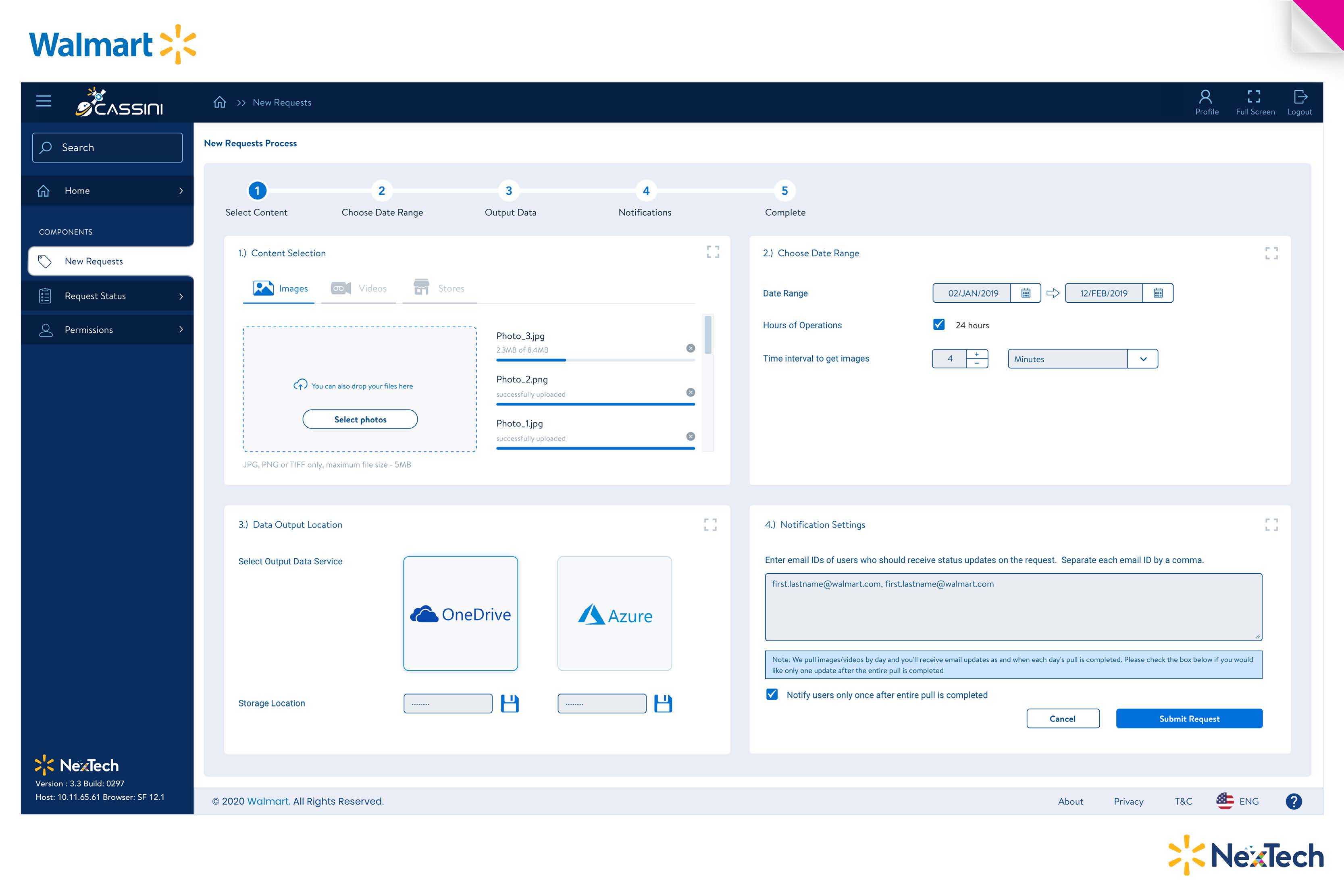
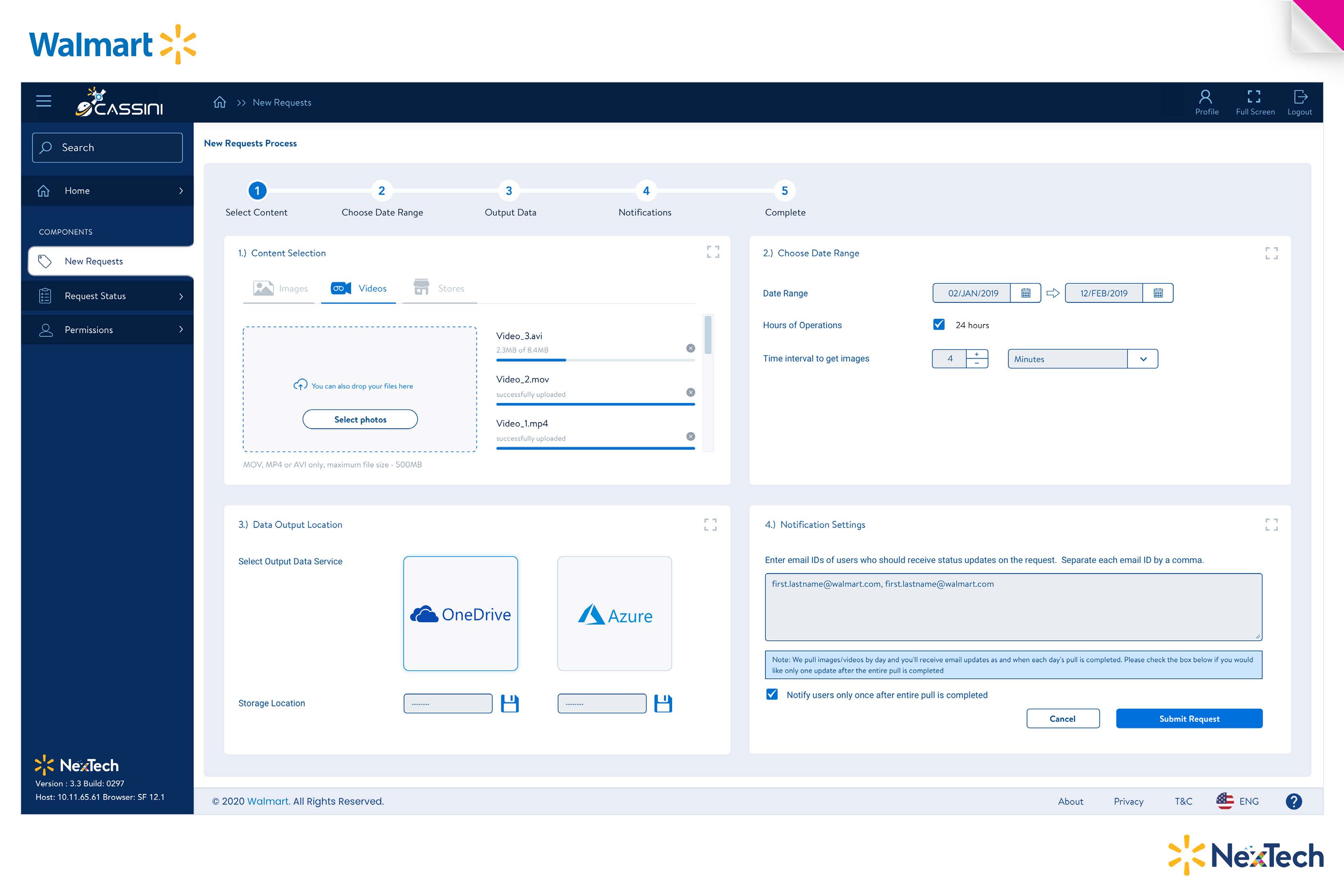
Worked on the UX structure connecting media requests, content selection, time ranges and output destinations. The request screens let reviewers define the relevant material, extraction interval, storage location and status notifications.
The repository supported access to material for internal review and investigation needs. External disclosure was a separate organizational and legal decision, rather than a consequence of simply locating a recording.
04 / Decisions & judgment
What carries through the design.
Start with what the reviewer needs to find.
Content type, store context and time scope help define the relevant material. The retrieval workflow connects those choices to a destination the reviewer can use.
Design the repository as part of a larger system.
The shared application structure and request states support continuity between separate components. The long-term intention was integration into a unified application.
Separate retrieval from permission to disclose.
Finding a recording and deciding whether it may be shared are different responsibilities. A useful review experience needs to respect that distinction.
The experience in detail
A retrieval workflow within the camera-media repository.
These request views show how reviewers could specify the media they needed and where the output should go. They form part of the broader repository and review experience.
01 / Start a media request
The application shell connects a new request with request status and permission navigation.
02 / Scope and route the material
Content type, time range and extraction interval define the requested media. Storage and notifications connect the request to its output.
05 / Results & business value
What changed through the work.
A repository and retrieval experience for camera recordings and extracted images, giving reviewers a structured way to organize material and prepare it for internal use or authorized investigation requests.
Why it matters.
Organized storage and scoped retrieval support the practical work of locating relevant recordings and reusing available material, with less dependence on disconnected file-handling steps.
06 / Reflection
Lessons for future projects.
Keep media organization, retrieval and disclosure decisions distinct while making the end-to-end review task coherent. An easy-to-find recording still needs an authorized purpose and appropriate handling.
Let’s talk about your next chapter.
Exploring Senior Director, Head of Design and VP opportunities.