
Walmart · Data Science
Synchro: moving safety research into simulation.
A Unity-based simulation project that replaced repeated staff-staged scenarios with varied 3D scenes for computer-vision research.
- My role
- Lead UX Technologist · Team Assembly, Scene Design & 3D Modeling
- Period
- Oct 2019 – Feb 2022
- Designed for
- Data science research teams
AI leadership noteChoose the simulation before choosing the model
Original approach
Assembled the team and worked with the data scientists to move scenario creation into Unity, the game engine. We learned the engine together while developing a simulated store environment.
What could change today
Ask data scientists which camera angle, lighting condition or occlusion the model struggles with. Generate controlled variants of that scene from the 3D assets and record the parameters with each clip.
Workflow excerpt. The numbered steps show the same part of the journey in each version. The full project includes work beyond this comparison.
Original workflow
- Label images in Wallaby
- Build the 3D environment
- Vary the simulated scenes
- Support model research
Proposed workflow with AI
- Review proposed labels in Wallaby before training.
- Build the simulated environment around a defined scenario.
- Generate variations in movement, lighting and visibility.
- Compare model performance with held-out real footage.
How to test the change
Reserve real footage for evaluation. Check whether a change helps under the original conditions and where simulated behavior still differs.
01 / Customer & problem
The need behind the work.
Who needed this.
The data science team needed varied safety-research scenarios without repeatedly pulling around 25 staff away from their other work.
The problem to solve.
Following the 2019 violence at Walmart, our Plano-based data science team researched ways to identify visible firearm threats in parking lots. Early scenario capture at a mock store required around 25 staff to pause their work and participate in staged scenes. Repeating that process consumed time across the team.
Create varied research scenarios in a simulated environment, reducing the need to repeatedly coordinate staff-based capture sessions.
02 / My ownership
Responsibilities.
Assembled the team, created the 3D models and built the Unity scenes. Also designed the original Wallaby labeling application. The data scientists ran the models using Wallaby-labeled data, and we worked together to connect the simulation and modeling efforts.
The constraint to work through.
The team was learning Unity while connecting simulation, 3D assets and model experimentation. Scene variation needed to be repeatable without repeated staff capture.
- Label images in Wallaby
- Build the 3D environment
- Vary the simulated scenes
- Support model research
03 / Actions & delivery
How the work came together.
Assembled the team and worked with the data scientists to move scenario creation into Unity, the game engine. We learned the engine together while developing a simulated store environment.
Created the 3D models and assembled the scenes used in the simulation. Randomized character movement and action timing allowed the team to work with varied scenarios rather than repeat the same staged capture.
The data scientists ran the models using the data labeled in Wallaby. We connected that modeling work with the Unity scenes, bringing data preparation, simulation and model experimentation into a shared project.
04 / Decisions & judgment
What carries through the design.
Address the cost of the research process.
The bottleneck was more than model training. Repeatedly gathering a large group for capture interrupted other work. Simulation gave the team another way to generate scenario variation.
Assemble the team around complementary skills.
Brought the team together, created the 3D assets and assembled the scenes. The data scientists led the modeling work. Learning Unity together helped us connect those contributions into a working research process.
Connect simulation to the research objective.
Repeatable scene variation supported the team’s exploration of earlier recognition of visible weapon cues. The environment gave data scientists a practical way to investigate different visual conditions.
The experience in detail
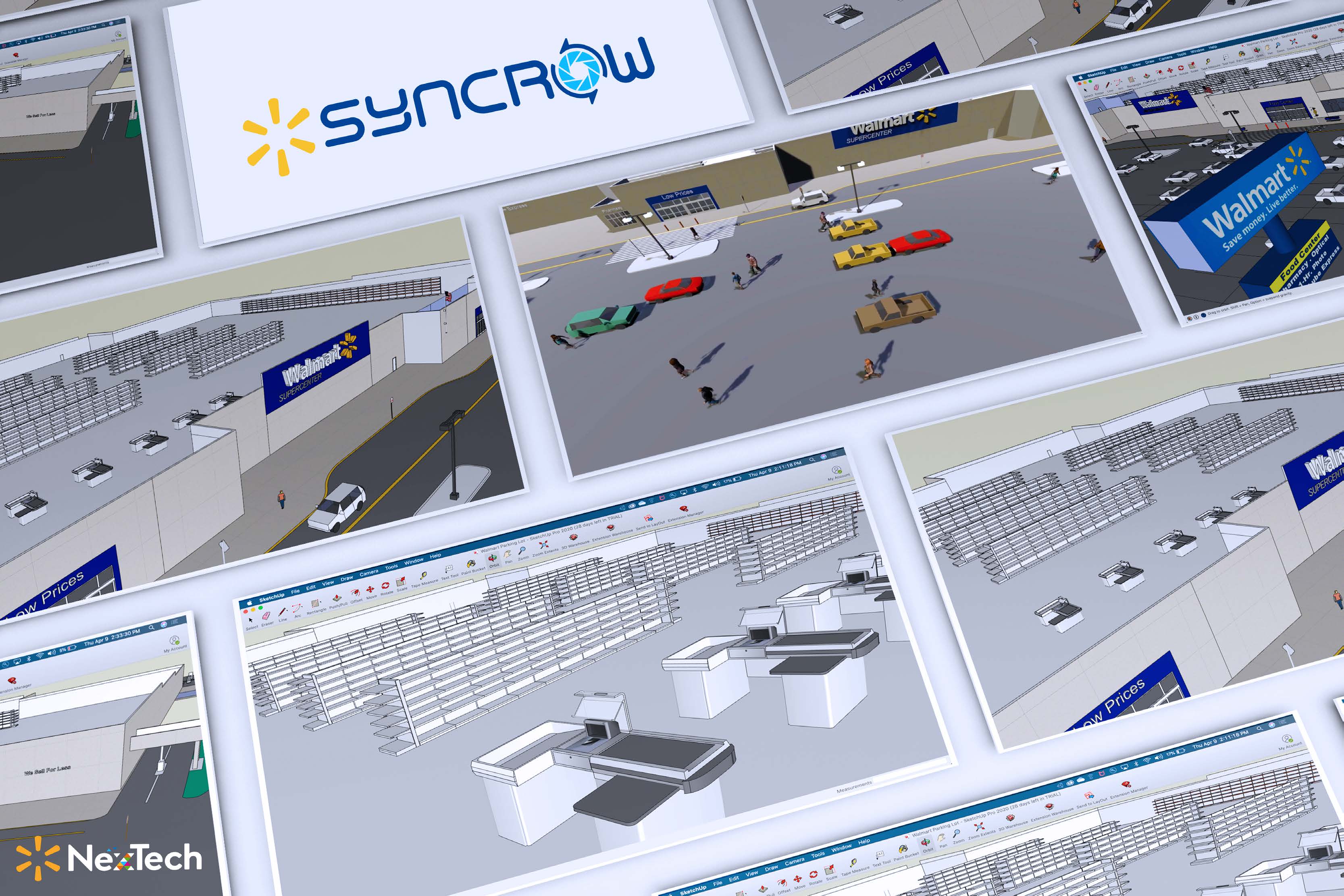
From staff-staged capture to a reusable 3D environment.
Created the 3D models and assembled the store scenes. Randomized character activity gave our team varied scenarios without gathering staff for every capture session.
A shared environment for scenario research
Assembled the team, created the models and built the scenes. The data scientists ran the models using Wallaby-labeled data, connecting their modeling work with the simulation.
05 / Results & business value
What changed through the work.
The team established a simulation-based alternative to repeated staff-staged capture, reducing coordination effort and time away from other work. Synchro advanced the parking-lot safety research through reusable 3D environments and varied scenarios.
Why it matters.
Reusable scenes changed the resource model for scenario research: creating variation no longer depended on coordinating the same large group of staff for each capture session.
06 / Reflection
Lessons for future projects.
Look for reusable environments when research operations become the bottleneck. Complementary skills and shared learning helped us change how the work was done.
Let’s talk about your next chapter.
Exploring Senior Director, Head of Design and VP opportunities.