
7-Eleven · Innovation / R&D
Making checkout-free shopping understandable.
A working cashierless-store prototype connecting identity, store entry, physical shopping and a digital receipt.
- My role
- UX Product Design Lead · R&D Innovation Lab
- Period
- Jan 2019 – Sep 2019
- Designed for
- Checkout-free shoppers
AI leadership noteTest the purchases that should never be charged
Original approach
Tested camera positions against the store’s compliance requirements. Shoppers picked up, pocketed, returned and exchanged products, then repeated the sequence in a crowd. The team compared each receipt with what the shopper actually left with, aiming for every charge to be correct.
What could change today
Use synchronized shelf events and camera observations to replay a pickup, return or exchange. Have an evaluator compare the proposed receipt with the known basket and route uncertain cases to review.
Workflow excerpt. The numbered steps show the same part of the journey in each version. The full project includes work beyond this comparison.
Original workflow
- Identify at entry
- Understand the visit
- Choose items and leave
- Receive the receipt
Proposed workflow with AI
- Identify the shopper and verify entry conditions.
- Explain how items are tracked and how to dispute a charge.
- Replay pickups, returns and swaps against synchronized sensor data.
- Compare the receipt with the known basket and flag doubtful charges.
Team and responsibilities
The lab had six people, including three direct reports. For a replay trial, assign separate owners for sensor capture, basket reconciliation and store observation. One person can cover multiple duties; a live crowd test still needs shoppers.
How to test the change
Track wrong charges and missed charges separately. Repeat the same basket with a crowd, a blocked view and a product returned to a different spot.
01 / Customer & problem
The need behind the work.
Who needed this.
Shoppers need confidence about entry, what to do in the store and how they know a checkout-free purchase is complete.
The problem to solve.
A checkout-free store changes a familiar shopping ritual. Customers need to know how to enter, what to do inside and how to tell that the purchase is complete. Computer vision and connected devices have to support that journey without becoming the customer’s responsibility.
Make the new store model tangible through a complete physical and digital prototype, with clear entry guidance and a recognizable purchase record.
02 / My ownership
Responsibilities.
Led UX and the R&D design team. Engineering and connected-device partners contributed to the working prototype.
The constraint to work through.
Identity, computer vision, devices and store operations have to behave as one experience even when no conventional checkout step is present.
- Identify at entry
- Understand the visit
- Choose items and leave
- Receive the receipt
03 / Actions & delivery
How the work came together.
Led a six-person R&D team, including three direct reports, working across UX, software and connected hardware.
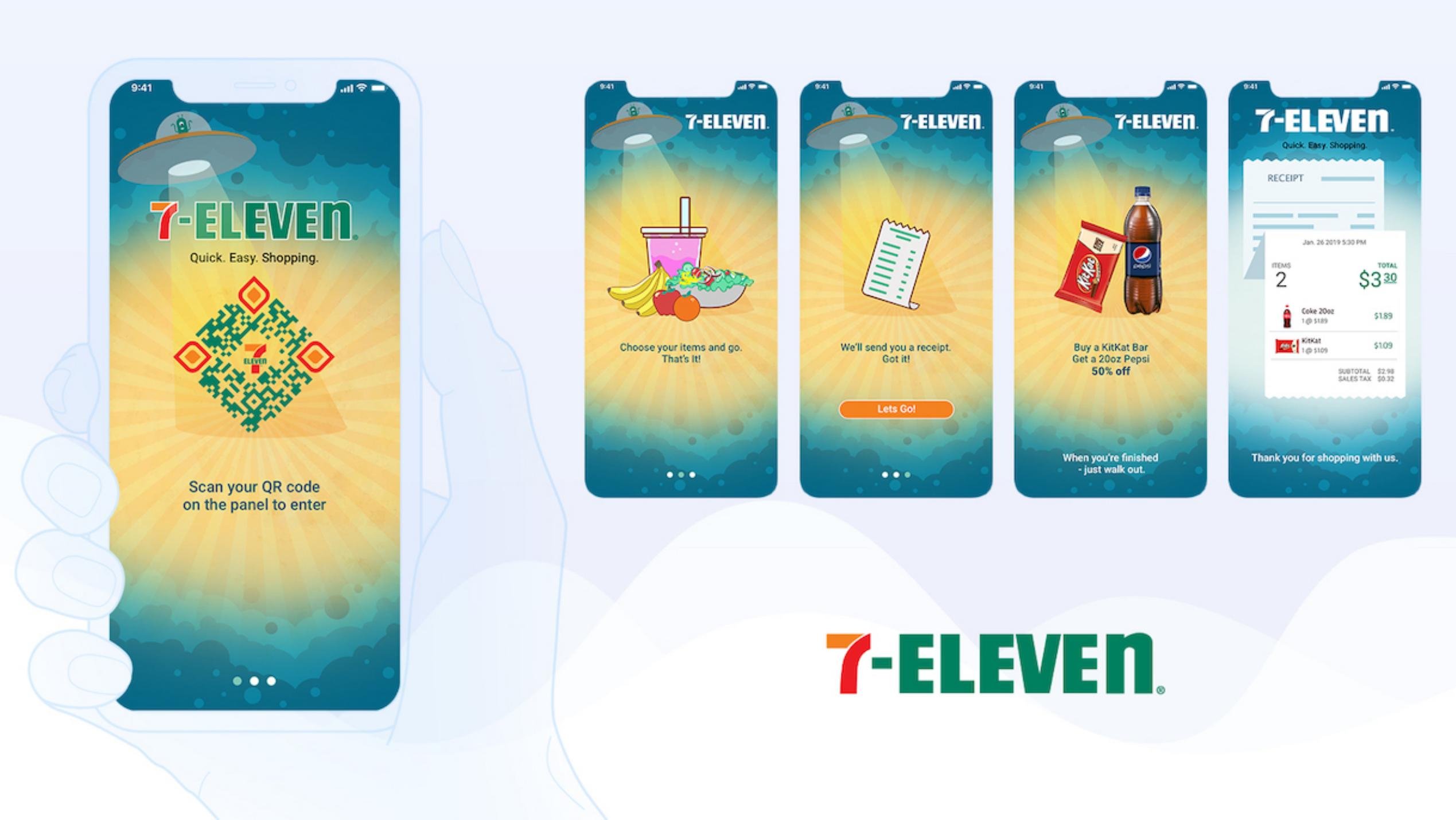
The team delivered a working cashierless-store prototype in under 30 days. The mobile designs connect entry identification, choose-and-go guidance and a digital receipt.
The mobile experience links identification and guided entry to shopping expectations and purchase confirmation after the customer leaves the store.
Tested camera positions against the store’s compliance requirements. Shoppers picked up, pocketed, returned and exchanged products, then repeated the sequence in a crowd. The team compared each receipt with what the shopper actually left with, aiming for every charge to be correct.
Sierra connected the same innovation effort to the associate’s shift. Separate entrance hardware trials tested coffee and bakery scents without spraying shoppers or leaving residue.
04 / Decisions & judgment
What carries through the design.
Explain the unfamiliar moment.
Entry guidance explicitly tells the customer to scan the code on the panel. The next screens explain choosing items, leaving and receiving a receipt.
Close the purchase loop.
A digital receipt provides item and total confirmation even when there is no conventional checkout counter.
Prototype across disciplines.
The customer journey depends on identity, devices, computer vision and operational behavior. A working prototype exposes those dependencies together.
- Pick up an item
- Return or swap it in a crowd
- Compare the receipt with the basket
The experience in detail
A store visit with a beginning and an end.
The experience needs to explain how to enter, what happens while shopping and how the purchase is confirmed. The entry code and digital receipt make an unfamiliar checkout-free model more concrete.
01 / Enter → shop → receive the receipt
An entry code identifies the customer. Onboarding explains the visit, and the itemized receipt confirms the purchase.
The experience in detail
Show the digital experience in its physical context.
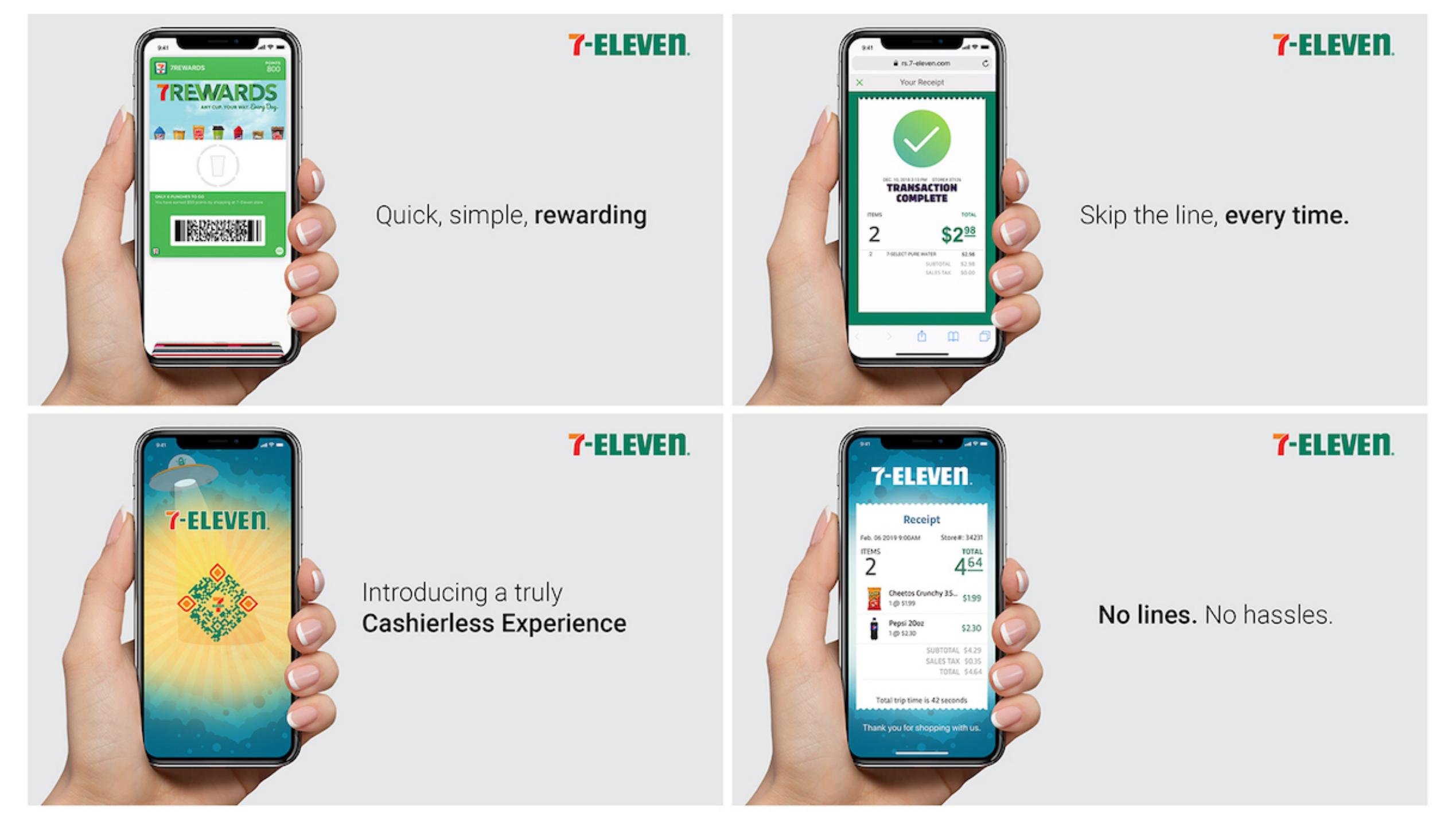
Rewards identification, store entry and completed transactions belong to the same customer relationship. The customer needs a clear indication of identity and purchase completion.
02 / Identity and completion
A rewards barcode and transaction confirmation connect identity and purchase completion. The autonomous-store entry and receipt follow the same customer logic.
05 / Results & business value
What changed through the work.
A working cashierless-store prototype delivered in under 30 days and recognized by the CEO. The mobile work makes the entry, shopping guidance and purchase-confirmation parts of the experience visible.
Why it matters.
The prototype brought the new retail model into a form that leadership and operating partners could evaluate together, connecting the technical system to a complete shopping journey.
06 / Reflection
Lessons for future projects.
Preserve the digital receipt and clear entry guidance as core parts of the service, because removing checkout also removes a familiar moment of reassurance.
Let’s talk about your next chapter.
Exploring Senior Director, Head of Design and VP opportunities.