
7-Eleven · Innovation / R&D
7-Voice: connecting a spoken order to a visible result.
A voice-commerce concept linking smart-speaker interaction with mobile order confirmation.
- My role
- UX Product Design Lead · R&D Innovation Lab
- Period
- Jan 2019 – Sep 2019
- Designed for
- Voice-commerce customers
AI leadership noteMake the order audible and verifiable
Original approach
The concept brings the smart speaker, conversational exchange and mobile order-received view into one presentation.
What could change today
Use a speech model to propose an order, then display the exact item, size, quantity and price on the paired phone. Ask the customer to resolve ambiguous words before confirming.
Workflow excerpt. The numbered steps show the same part of the journey in each version. The full project includes work beyond this comparison.
Original workflow
- Make the request
- Confirm the order
- Review mobile details
- Follow delivery context
Proposed workflow with AI
- Capture the spoken request and mark uncertain words.
- Read back the items and quantities for confirmation.
- Show the same order and corrections on the phone.
- Track delivery status against the confirmed order.
How to test the change
Test background noise, corrections and similar product names. Compare the confirmed basket with what the customer asked for.
01 / Customer & problem
The need behind the work.
Who needed this.
A customer placing a spoken order needs a reliable way to inspect the items, charges and delivery context after the conversation ends.
The problem to solve.
A spoken ordering experience is transient. After making a request, the customer still needs confidence about what was ordered, the cost, delivery and payment.
Connect conversational ordering to a persistent mobile order record so voice and screen support the same purchase.
02 / My ownership
Responsibilities.
Designed the voice-and-mobile interaction direction within 7-Eleven’s innovation work, connecting the spoken exchange to the mobile order experience.
The constraint to work through.
Voice is brief and transient; detailed fees and payment context need a persistent destination without forcing the customer to repeat the task.
- Make the request
- Confirm the order
- Review mobile details
- Follow delivery context
03 / Actions & delivery
How the work came together.
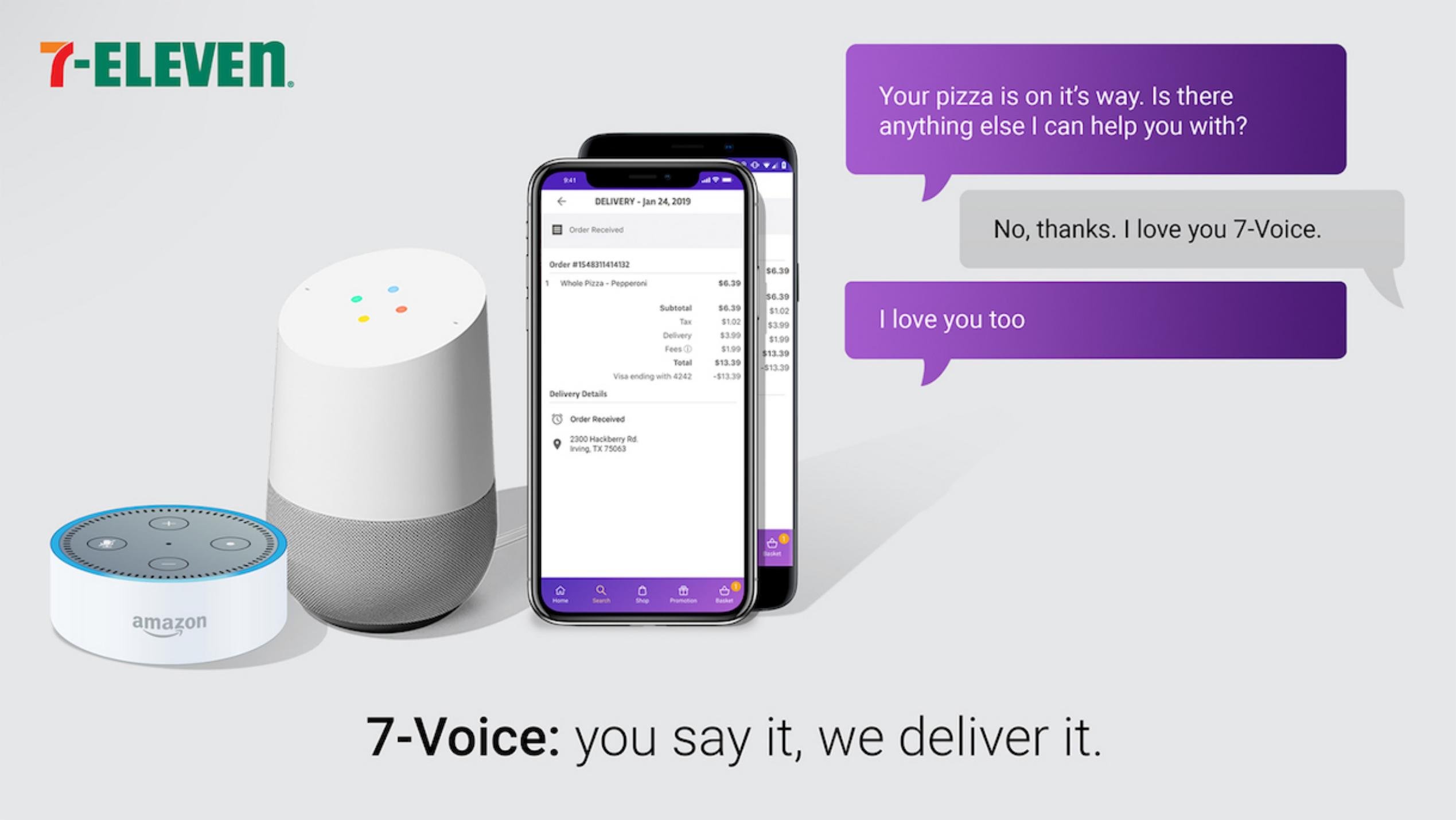
The concept brings the smart speaker, conversational exchange and mobile order-received view into one presentation.
The mobile order view itemizes the purchase and includes subtotal, tax, delivery, fees and payment context. It gives the spoken exchange a visible destination.
04 / Decisions & judgment
What carries through the design.
Let each channel do useful work.
Voice supports the request and acknowledgment. The screen keeps the detailed order information available for review.
Keep completion concrete.
An order-received view communicates that the transaction has reached a recognizable state, with enough detail to inspect it.
The experience in detail
A spoken request, a visible order.
A voice-led purchase still needs a durable record. The design connects the conversation to an order-received screen with item, price, delivery and payment context.
Request → confirmation → mobile order detail
The voice exchange acknowledges the request while the mobile order record makes the purchase details available for review.
05 / Results & business value
What changed through the work.
A voice-and-mobile ordering concept that demonstrates the connection between conversational confirmation and a durable order record.
Why it matters.
The design connects conversational ordering with an itemized mobile order record, giving the service a coherent path across channels.
06 / Reflection
Lessons for future projects.
Give each channel a specific job: conversation for the request, a screen for reviewable detail and a clear confirmation shared by both.
Let’s talk about your next chapter.
Exploring Senior Director, Head of Design and VP opportunities.