
Walmart · Data Science
Unity: a shared language for Data Science tools.
Design assets and reusable production-code components across data-rich applications.
- My role
- Lead UX Technologist · Data Science Platforms
- Period
- Oct 2019 – Feb 2022
- Designed for
- Design, engineering & internal-tool users
AI leadership noteSpecify a component in Markdown
Original approach
Led UX for Unity, connecting design assets with reusable production-code components.
What could change today
Describe each data table’s columns, empty states, keyboard behavior and density in a versioned Markdown file. Have an agent draft the coded example and its tests from that contract. Designers and engineers review the running component together.
Workflow excerpt. The numbered steps show the same part of the journey in each version. The full project includes work beyond this comparison.
Original workflow
- Define shared foundations
- Build reusable patterns
- Apply in products
- Govern and evolve
Proposed workflow with AI
- Specify tokens, density and keyboard behavior in Markdown.
- Generate a coded pattern and its interaction tests.
- Try the pattern with real data in a consuming application.
- Review changes with owners and version the contract.
How to test the change
Change one sorting rule and check the documentation, keyboard interaction and consuming application against the same example.
Figma: connecting design context to agents
Agentic Design System tool01 / Customer & problem
The need behind the work.
Who needed this.
Designers, engineers and internal-tool users need shared patterns across different Data Science applications.
The problem to solve.
An organization building several Data Science tools needs consistency across navigation, layouts, visualizations and interaction states. Independently solving those foundations makes every product harder to align and support.
Create a shared design and implementation foundation while preserving the task-specific needs of each application.
02 / My ownership
Responsibilities.
Led UX for Walmart’s shared Data Science design system, connecting design assets with reusable production-code components and cross-functional governance. Guided an eight-person platform team, including four direct reports.
The constraint to work through.
A common shell must accommodate specialized annotation, analytical and operational tasks. Design assets also need a usable implementation counterpart.
- Define shared foundations
- Build reusable patterns
- Apply in products
- Govern and evolve
03 / Actions & delivery
How the work came together.
Led UX for Unity, connecting design assets with reusable production-code components.
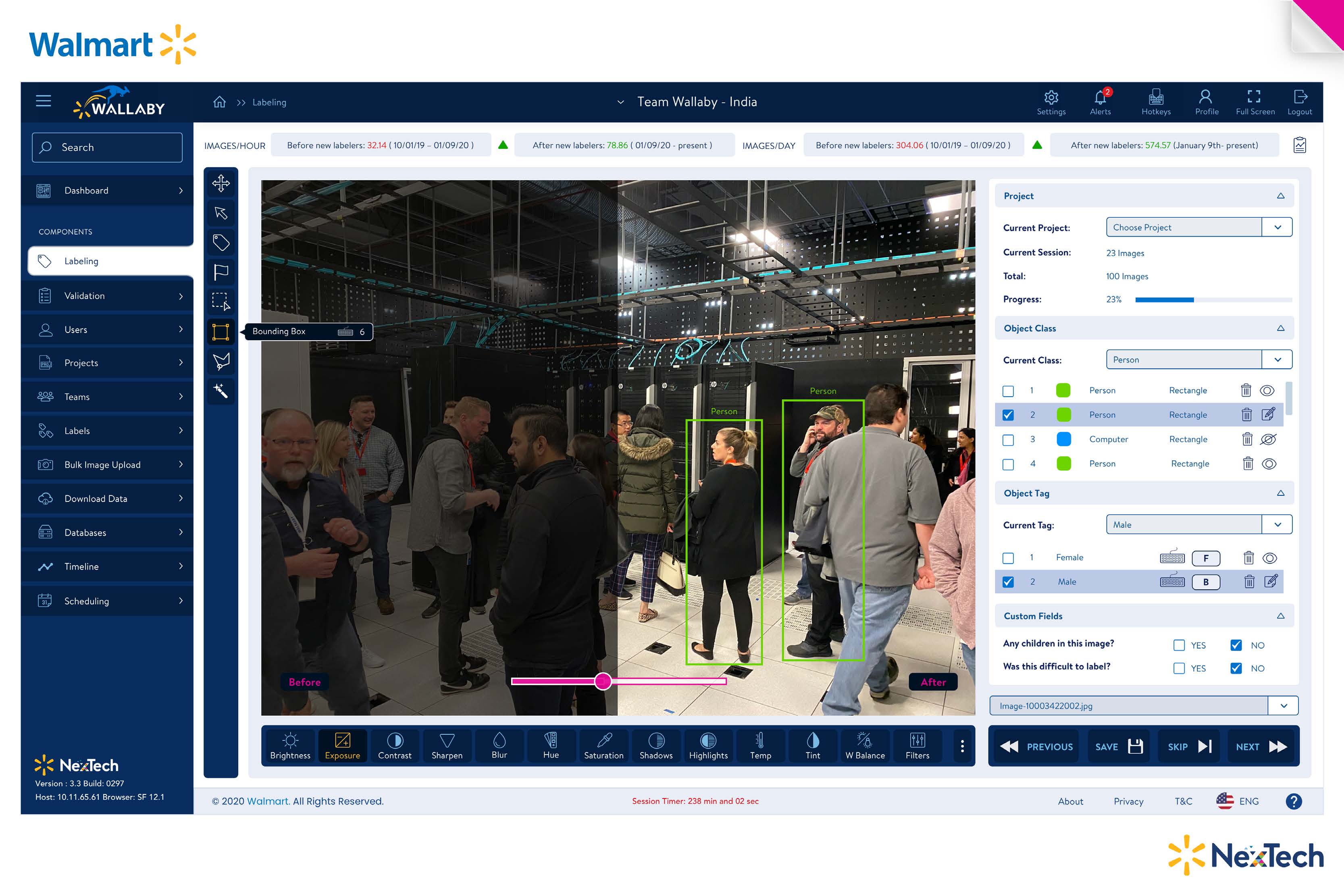
Cross-functional governance and two-year roadmaps supported the platform direction. Applications such as Wallaby, operational dashboards and data tools provided different contexts for the shared patterns.
04 / Decisions & judgment
What carries through the design.
Pair design and implementation.
A shared component needs to work in design and in production code. Unity connects both parts of the delivery chain.
Keep the domain legible.
Consistent shells and patterns should help people understand the tool without obscuring its operational information.
The experience in detail
The work, as a connected experience.
Design assets and reusable production-code components across data-rich applications.
01 / Establish the shared identity
Unity gives the platform a recognizable system identity.
02 / Apply the application structure
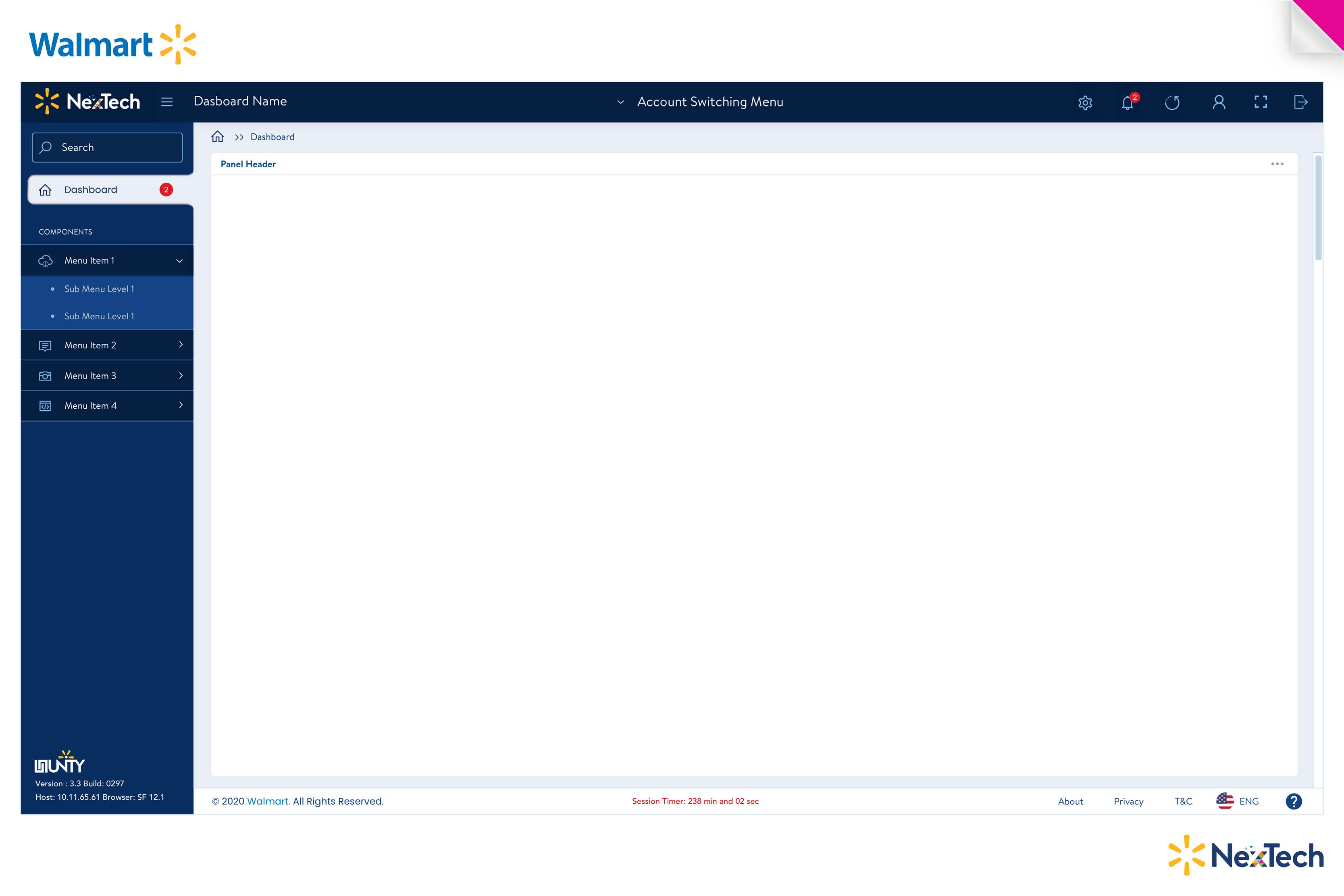
Shared navigation and layout establish a common working frame.
03 / Support a specific workflow
The labeling application applies a coherent shell to a specialized annotation task.
05 / Results & business value
What changed through the work.
A shared design-system and code foundation for Walmart Data Science tools, with governance and application-level patterns.
Why it matters.
A common design and code foundation supports reuse across specialized internal products, giving teams a shared starting point and a mechanism for consistent updates.
06 / Reflection
Lessons for future projects.
Use real application needs to shape the common patterns, then pair design guidance with components teams can actually implement.
Let’s talk about your next chapter.
Exploring Senior Director, Head of Design and VP opportunities.